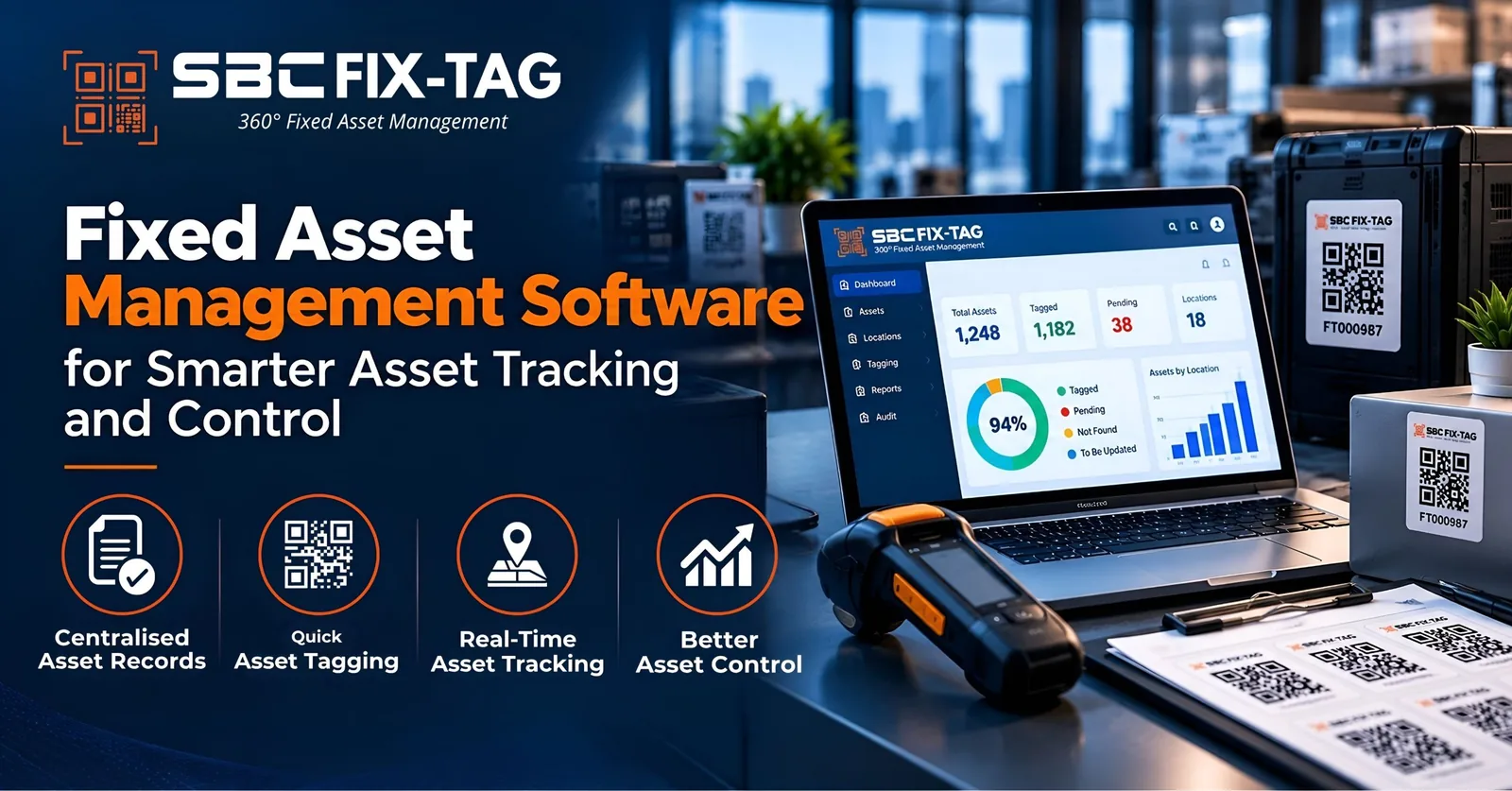
Manage your organisation's assets with greater accuracy, visibility and control using Fixed Asset Management Software from SBC FIX-TAG. Simplify fixed asset tracking, maintain an organised fixed asset register, streamline asset lifecycle management, and improve the way your business handles physical verification, depreciation records and asset-related compliance.
From computers and office equipment to machinery, furniture and other business assets, SBC FIX-TAG helps organisations bring essential asset information into a more structured management process. Reduce dependence on scattered spreadsheets and manual registers while improving asset visibility, record accuracy and accountability across departments and locations.
Whether you are a growing business, a finance team or an organisation managing assets across multiple locations, effective fixed asset management helps you understand what you own, where assets are located, how they are being used and what information is required for financial reporting and audits.
Bring your asset records, tracking activities and verification processes into a more organised workflow with SBC FIX-TAG.
SBC FIX-TAG | 360° Fixed Asset Management
Fixed asset management built for India — dual SLM + WDV, QR physical audit, GST & TDS compliance, procurement-to-disposal pipeline.
What Is Fixed Asset Management Software?
Fixed Asset Management Software is a digital solution that helps businesses record, track, monitor and manage fixed assets throughout their useful life. It supports the management of asset information, including acquisition details, asset identification, location, assignment, depreciation records, physical verification and disposal.
Instead of maintaining disconnected spreadsheets and manual records, businesses can use fixed asset tracking software to create a more consistent view of their assets and related information.
An effective fixed asset management system helps finance, operations and administration teams improve asset visibility, support physical verification, maintain traceable records and prepare information needed for internal reviews and statutory audits.
Why Do Businesses Need Fixed Asset Management Software?
Manual asset management can make it difficult to maintain accurate records, identify asset locations, track movements and reconcile physical assets with accounting records. Fixed Asset Management Software helps address these challenges by supporting:
- Centralised fixed asset records for better access to asset information.
- Asset tracking and identification to improve visibility of asset locations and assignments.
- Physical asset verification to compare recorded assets with assets physically present.
- Depreciation management to organise relevant financial and tax depreciation information.
- Audit trail management to support traceability of asset-related activities.
- Asset lifecycle management from acquisition and registration to transfer and disposal.
- Compliance support through better-maintained records and structured workflows.
Key Features of SBC FIX-TAG Fixed Asset Management Software
1. Fixed Asset Register Management
Maintain an organised fixed asset register containing important information about your organisation's assets. A structured register helps teams access asset details more consistently and reduces dependence on multiple spreadsheets.
Record relevant information such as asset descriptions, identification numbers, acquisition details, asset categories, locations, assigned departments and other applicable records.
A well-maintained fixed asset register software process supports better visibility of the organisation's asset base and helps finance teams prepare for reconciliations, reviews and reporting activities.
Key benefits:
- Organised asset information in a structured format.
- Improved access to asset identification and ownership records.
- Easier review of asset details across business functions.
- Better support for asset reconciliation and reporting.
2. Asset Tracking and Identification
Knowing where assets are located and who is responsible for them is essential for effective asset control. Asset tracking software helps organisations improve visibility into asset locations, assignments and movements.
With a structured asset identification process, businesses can maintain clearer records for office equipment, IT assets, machinery, furniture and other physical assets.
Better fixed asset tracking helps teams identify discrepancies, review asset assignments and maintain accountability as assets move between departments, users or business locations.
Key benefits:
- Improved asset identification and traceability.
- Better visibility of asset locations and assignments.
- More organised records of asset movements.
- Reduced reliance on manual asset searches.
3. QR Code-Based Physical Asset Verification
Physical verification is an important part of fixed asset management. Businesses need to confirm that assets recorded in their registers physically exist and that their details correspond with the available records.
QR code-based asset tracking can simplify asset identification and support more structured physical verification workflows. By associating asset identification information with QR codes, organisations can make it easier for authorised teams to identify assets during verification activities.
A systematic physical asset verification process helps businesses identify missing assets, location differences, duplicate records and other discrepancies that may require investigation.
Key benefits:
- More organised asset identification during physical checks.
- Improved comparison between physical assets and recorded information.
- Easier identification of discrepancies for follow-up.
- Better support for internal verification and audit preparation.
4. Fixed Asset Depreciation Management
Accurate fixed asset depreciation management is important for financial reporting, asset valuation and tax-related calculations. Businesses must maintain relevant asset cost details, useful-life information, depreciation methods and supporting records according to applicable accounting and tax requirements.
A structured depreciation management system can help finance teams organise asset-related information and maintain clearer depreciation records.
Where applicable, businesses may need to maintain separate depreciation calculations for financial reporting under the Companies Act, 2013, and income-tax purposes under the Income-tax Act, 1961. These calculations follow different requirements and should be reviewed against the relevant provisions and circumstances.
Key benefits:
- Better organisation of asset cost and depreciation information.
- Improved visibility into asset values and depreciation records.
- Support for financial reporting and tax-related working papers.
- More structured review of asset additions, transfers and disposals.
5. Asset Lifecycle Management
Effective asset lifecycle management software supports the systematic management of assets from acquisition through retirement or disposal.
A structured lifecycle process helps businesses maintain records at different stages, rather than treating the fixed asset register as a one-time record that is updated only during year-end activities.
The asset lifecycle may include:
- Asset acquisition: Record relevant purchase and acquisition information.
- Asset registration: Add the asset to the fixed asset register.
- Asset identification: Assign an appropriate identification reference or tag.
- Asset assignment: Record the relevant location, department or responsible person.
- Asset verification: Check physical assets against recorded information.
- Asset transfer: Update records when an asset changes location or assignment.
- Asset depreciation: Maintain relevant depreciation information.
- Asset disposal: Record retirement, sale, scrapping or other applicable disposal details.
A consistent fixed asset lifecycle management process improves record continuity and helps businesses maintain a clearer history of their assets.
6. Audit Trails and Asset Record Traceability
Reliable asset records are essential when internal auditors, finance teams or statutory auditors need to review transactions and supporting information.
Fixed asset audit trail management helps organisations maintain a more traceable record of asset-related activities. Clear documentation can support the review of asset additions, transfers, changes in records, physical verification results and disposals.
Maintaining appropriate supporting documents and review procedures also helps businesses investigate discrepancies and improve internal controls over asset management.
Key benefits:
- Better traceability of asset-related information.
- Improved support for internal reviews and audit preparation.
- More structured documentation of asset changes.
- Easier identification of records that require investigation.
7. GST and TDS Workflows for Asset-Related Processes
Asset purchases, transfers and disposals may involve relevant GST compliance and TDS compliance considerations, depending on the transaction and applicable law.
A structured asset management process can help businesses organise relevant transaction information and supporting documentation for review by finance and tax teams.
For example, asset acquisition records may need to be reviewed alongside purchase invoices and applicable input tax credit documentation. Certain payments or transactions may also require a separate assessment of TDS obligations under the applicable provisions.
Maintaining consistent records helps teams access relevant information when performing tax reviews, reconciliations and compliance activities. Tax treatment should always be determined based on the nature of the transaction and the law applicable to it.
Key benefits:
- Better organisation of asset purchase documentation.
- Easier access to records for tax review and reconciliation.
- Improved coordination between asset, finance and tax teams.
- Structured supporting information for compliance assessments.
Benefits of Using Fixed Asset Management Software
Improve Asset Visibility and Control
Maintain a clearer view of your organisation's asset records, locations and assignments. Better visibility helps management teams make informed decisions about asset utilisation, movement and control.
Reduce Manual Record-Keeping
Move away from fragmented spreadsheets and repetitive manual updates towards a more structured fixed asset management system. Consistent records can help reduce avoidable administrative effort.
Strengthen Physical Verification
A systematic fixed asset verification process helps businesses compare physical assets with recorded information, investigate differences and improve the reliability of their asset records.
Support Financial Reporting
Organised asset acquisition, cost and depreciation records help finance teams prepare and review information required for financial statements and related reporting activities.
Improve Audit Preparedness
Accessible records, supporting documentation and traceable asset-related activities help teams respond more efficiently to internal reviews and audit requests.
Improve Accountability Across Departments
Clear asset identification and assignment records help organisations establish responsibility for assets and maintain better control over movements between employees, departments and locations.
How SBC FIX-TAG Supports a More Structured Asset Management Process
A well-defined asset management process helps businesses maintain reliable records throughout the asset lifecycle. SBC FIX-TAG's fixed asset management approach can be positioned around the following workflow, subject to the features enabled in your solution.
- Step 1 — Record Asset InformationCapture the relevant asset details and maintain structured records for identification, classification and future reference.
- Step 2 — Identify and Tag AssetsUse an appropriate asset identification method, including QR code-based identification where available, to help teams identify assets during tracking and physical verification.
- Step 3 — Maintain Asset Locations and AssignmentsKeep relevant asset location and assignment information organised so authorised teams can review where assets are recorded and who is responsible for them.
- Step 4 — Verify Physical AssetsConduct physical verification and compare the results with the available asset register. Investigate differences and update records through the organisation's approved process.
- Step 5 — Maintain Depreciation and Compliance RecordsOrganise relevant cost, depreciation and transaction documentation to support financial reporting, tax reviews and compliance assessments.
- Step 6 — Review Asset Records and Prepare ReportsReview asset information, identify discrepancies and maintain supporting documentation for management reporting, reconciliations and audit preparation.
Who Can Benefit from Fixed Asset Management Software?
Fixed Asset Management Software can support organisations that need a structured way to record, track and verify physical assets.
Manufacturing and Industrial Businesses
Manage records for machinery, equipment, tools and other operational assets while improving asset identification and verification processes.
Corporate Offices and Professional Services Firms
Maintain records for computers, laptops, office furniture, printers and other workplace assets across departments.
IT and Technology Teams
Improve the organisation of IT asset records, including computers, monitors, networking equipment and other technology assets.
Multi-Location Businesses
Support consistent asset records across offices, branches, facilities and operational locations.
Finance and Accounting Teams
Organise the fixed asset register, depreciation information, supporting documents and records needed for financial reporting and reconciliation.
Internal Audit and Compliance Teams
Use structured asset records and verification information to support internal controls, audit procedures and the investigation of discrepancies.
Why Choose SBC FIX-TAG for Fixed Asset Management?
Managing fixed assets effectively requires more than recording purchase values. Businesses need a structured process for asset identification, record maintenance, physical verification, depreciation information and supporting documentation.
With a focus on fixed asset tracking, fixed asset register management, physical asset verification, depreciation management and audit trail documentation, SBC FIX-TAG can help businesses work towards more consistent asset records and better visibility into their asset base.
By organising asset information and related workflows, businesses can improve coordination between finance, administration, operations and audit teams.
Choose a more structured approach to fixed asset management with SBC FIX-TAG.
Frequently Asked Questions About Fixed Asset Management Software
What is the best fixed asset management software for businesses?
The right fixed asset management software depends on an organisation's asset volume, number of locations, reporting requirements, physical verification needs, depreciation processes and internal controls. Businesses should evaluate how well a solution supports their fixed asset register, tracking, verification and reporting workflows.
What is the difference between fixed asset management software and asset tracking software?
Fixed asset management software typically focuses on maintaining asset records throughout their lifecycle, including acquisition, depreciation, verification and disposal. Asset tracking software focuses more specifically on identifying assets and monitoring their locations, assignments and movements. Some solutions support both sets of requirements.
How does fixed asset management software help with physical verification?
A fixed asset verification system helps businesses compare recorded asset information with assets physically present. Where QR code identification is available, scanning can simplify asset identification and help teams record verification results and investigate discrepancies.
Can fixed asset management software help maintain a fixed asset register?
Yes. Fixed asset register software helps businesses organise information such as asset descriptions, identification numbers, acquisition details, locations, assignments and other relevant records. The available fields and workflows depend on the software.
Can fixed asset management software support depreciation management?
A suitable fixed asset depreciation management system can help organise asset costs, useful-life information, depreciation methods and related calculations or records. Businesses should confirm that the solution supports their required accounting and income-tax depreciation workflows.
How does fixed asset management software support audits?
Fixed asset management software can help improve access to asset registers, verification records, supporting documents and asset-related activity histories. These records can assist finance and audit teams in reviewing asset existence, movements, depreciation and disposal information.
Is fixed asset management software useful for businesses with multiple locations?
Businesses with assets distributed across different branches, offices or facilities can benefit from structured asset identification, location records and physical verification processes. The exact multi-location functionality should be confirmed with the software provider.
How can a business get started with SBC FIX-TAG?
Start by assessing your current asset register, tracking process, physical verification requirements and reporting needs. Contact SBC FIX-TAG to discuss your requirements and confirm which features and workflows are available for your organisation.
Bring Greater Control to Your Fixed Asset Management Process
Unorganised asset records, manual verification and disconnected spreadsheets can make it difficult to maintain a reliable view of your organisation's assets. A structured approach to fixed asset management can improve visibility, record consistency, verification and audit preparation.
With SBC FIX-TAG Fixed Asset Management Software, explore a more organised approach to fixed asset tracking, asset lifecycle management, fixed asset register management and physical asset verification.
Ready to improve the way your organisation manages fixed assets?
Contact SBC FIX-TAG to discuss your asset management requirements and request a demo.
Software and field service overview