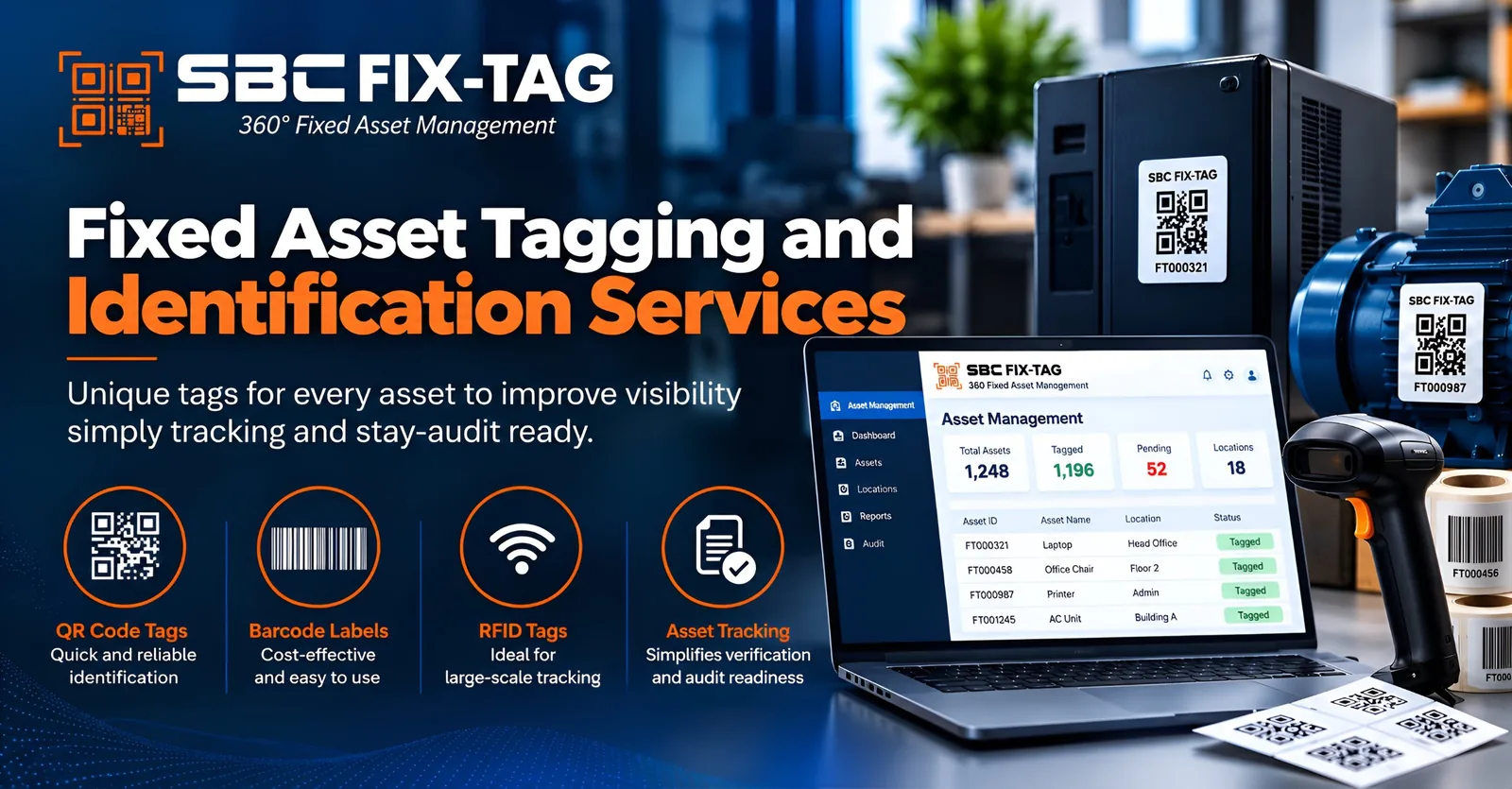
SBC FIX-TAG helps businesses improve asset visibility and control through structured fixed asset tagging and identification. By assigning a unique identifier to each asset and linking it to reliable asset information, organisations can make it easier to locate equipment, maintain records, conduct physical verification and prepare for audits.
Our asset tagging services can use suitable identification methods such as QR code asset tags, barcode asset labels and RFID asset tags, depending on the asset type, operating environment and tracking requirements. The goal is to create a consistent identification process that connects physical assets with their records.
Whether your organisation manages IT equipment, office furniture, plant and machinery or assets across multiple locations, a structured fixed asset identification system can help reduce manual searching, improve record consistency and support organised asset management.
SBC FIX-TAG | 360° Fixed Asset Management
Fixed asset management built for India — dual SLM + WDV, QR physical audit, GST & TDS compliance, procurement-to-disposal pipeline.
What Is Fixed Asset Tagging and Identification?
Fixed asset tagging and identification is the process of assigning a unique ID to a physical asset and placing a readable tag or label on it. The identifier can be used to match the physical item with details such as asset description, serial number, department, location, custodian and the relevant fixed asset register entry.
Depending on the requirement, identification can be carried out using QR code, barcode or RFID technology. A consistent tagging standard helps teams distinguish similar assets, record transfers, support physical verification and maintain clearer asset histories.
Why Does Your Business Need Asset Tagging?
When assets are not clearly identified, employees may spend extra time searching for equipment or matching physical items to spreadsheet entries. Labels can become inconsistent, assets may move without records being updated, and verification exercises can become difficult. A standardised asset tagging system gives each asset a recognisable identifier and provides a repeatable way to connect on-site assets with business records.
- Improve asset visibility: Identify assets more easily by using a unique tag linked to their records.
- Support physical verification: Make it easier to compare assets found on site with the fixed asset register.
- Strengthen record consistency: Use a common identification format across departments, buildings and locations.
- Simplify audit preparation: Help teams locate assets and organise supporting information for verification activities.
- Support asset movement tracking: Use the identifier as a reference when assets are transferred, reassigned or relocated.
Asset Tagging Technologies
The right tag depends on asset material, environment, scanning method, data requirements and existing processes. SBC FIX-TAG can help define a consistent identification approach based on project scope.
QR Code Asset Tagging
QR code asset tagging uses a two-dimensional code that can be scanned by a compatible smartphone or scanner. It can be useful when teams need a convenient way to access an asset ID or related digital record, subject to the configured system.
Barcode Asset Tagging
Barcode asset tagging assigns a machine-readable barcode to an asset. Barcode labels can support repeatable identification and scanning workflows during asset counts, transfers and verification exercises.
RFID Asset Tagging
RFID asset tagging uses radio-frequency identification tags and compatible readers to identify tagged assets without requiring the same direct visual scan used by typical QR codes or barcodes. RFID suitability depends on the tag, reader, asset material and site conditions.
Choosing the Right Asset Identification Method
Before selecting a method, consider asset quantity, tag durability, indoor or outdoor use, scanning distance, metal surfaces, data integration needs and verification frequency. The best choice is the one that fits the operational environment and can be maintained consistently.
Our Fixed Asset Tagging and Identification Process
- 1. Understand the Asset BaseReview asset categories, locations, existing records and identification challenges to define project scope.
- 2. Define the Identification StandardAgree on the asset numbering convention, tag format, placement guidelines and information to be captured.
- 3. Prepare and Apply Asset TagsPrepare the selected QR, barcode or RFID labels and apply them to the relevant assets according to the agreed process.
- 4. Capture and Match Asset DetailsRecord or validate available asset information and associate the unique tag ID with the appropriate asset record.
- 5. Review and HandoverReview exceptions or incomplete records, then hand over the agreed tagging data and project outputs.
Assets That Can Be Tagged and Identified
A fixed asset tagging service can be planned for many asset categories, depending on project scope and the suitability of the selected label or tag.
- IT assets such as laptops, desktops, monitors, printers and networking equipment
- Office assets such as desks, chairs, cabinets and conference-room equipment
- Plant and machinery used in manufacturing or operational facilities
- Electrical equipment and selected facility assets
- Tools, instruments and equipment that require unique identification
- Assets distributed across branches, offices, warehouses or multiple sites
Benefits of a Structured Asset Identification System
- Clear asset identity: A unique tag helps distinguish one asset from another, including similar models or equipment.
- More organised asset records: A consistent identifier creates a practical link between the physical asset and its record.
- Easier verification workflows: Scannable labels can help teams locate and confirm assets during scheduled checks.
- Better movement documentation: Tag IDs can be referenced when recording asset transfers, relocation or reassignment.
- Scalable processes: A standard tagging convention can be applied across asset categories and locations as the organisation grows.
Who Can Benefit from Fixed Asset Tagging Services?
Organisations with large, varied or geographically distributed asset bases may benefit from a consistent tagging programme. This can include manufacturing companies, corporate offices, educational institutions, healthcare facilities, warehouses, retail operations, IT departments and businesses managing assets across multiple branches.
Fixed Asset Tagging vs. Asset Verification
Asset tagging gives an asset a unique physical identifier. Physical asset verification checks whether assets are present and whether their observed details match the relevant records. The activities are related but not identical: tagging supports identification, while verification confirms physical status and record matching.
Combining them may be useful when an organisation is establishing or improving its fixed asset register.
Why Choose SBC FIX-TAG for Asset Tagging and Identification?
SBC FIX-TAG focuses on helping organisations build a clearer link between physical assets and asset information. A well-planned tagging project starts with understanding the asset base, selecting an appropriate identification method and applying a consistent standard. Project scope, tag technology, data capture and final deliverables should be agreed before execution.
- Requirement-led approach: plan tagging around asset categories, site conditions and operational needs.
- Consistent identification: use a defined asset ID format and placement approach.
- Technology options: consider QR codes, barcodes or RFID according to the use case.
- Record linkage: connect tag identifiers with the relevant asset information provided or approved by the client.
- Practical handover: document the agreed project outputs and any exceptions requiring follow-up.
Frequently Asked Questions
What is fixed asset tagging?
Fixed asset tagging is the process of attaching a unique identifier, such as a QR code, barcode or RFID tag, to a physical asset and linking it to the asset's record.
Why is asset identification important?
Asset identification helps teams distinguish individual assets, locate them more easily, connect physical items with records and support verification and audit workflows.
What is the difference between QR code, barcode and RFID asset tags?
QR codes and barcodes are typically read by a compatible optical scanner or camera. RFID tags are read by a compatible radio-frequency reader. Suitability depends on the asset, environment and workflow.
Which assets can be tagged?
Common examples include IT equipment, office furniture, plant and machinery, electrical equipment, tools and other assets that need unique identification.
Can asset tagging support physical verification?
Yes. Unique identifiers can help teams match assets found on site with asset records during physical verification. Outcomes also depend on record accuracy and the verification process.
How do we choose an asset tagging method?
Consider asset type, label durability, surface material, scanning requirements, site conditions, asset volume and any system or reporting needs.
Does tagging alone guarantee an accurate fixed asset register?
No. Tagging establishes a physical identifier, but register accuracy may also require data validation, physical verification, reconciliation and ongoing updates when assets move or change status.
Improve Asset Visibility with SBC FIX-TAG
Build a more consistent approach to fixed asset tagging and identification with a tagging plan suited to your assets, locations and operational requirements. Contact SBC FIX-TAG to discuss your asset base, identification challenges and project scope.
Contact SBC FIX-TAG to discuss your fixed asset tagging and identification requirements.
Software and field service overview