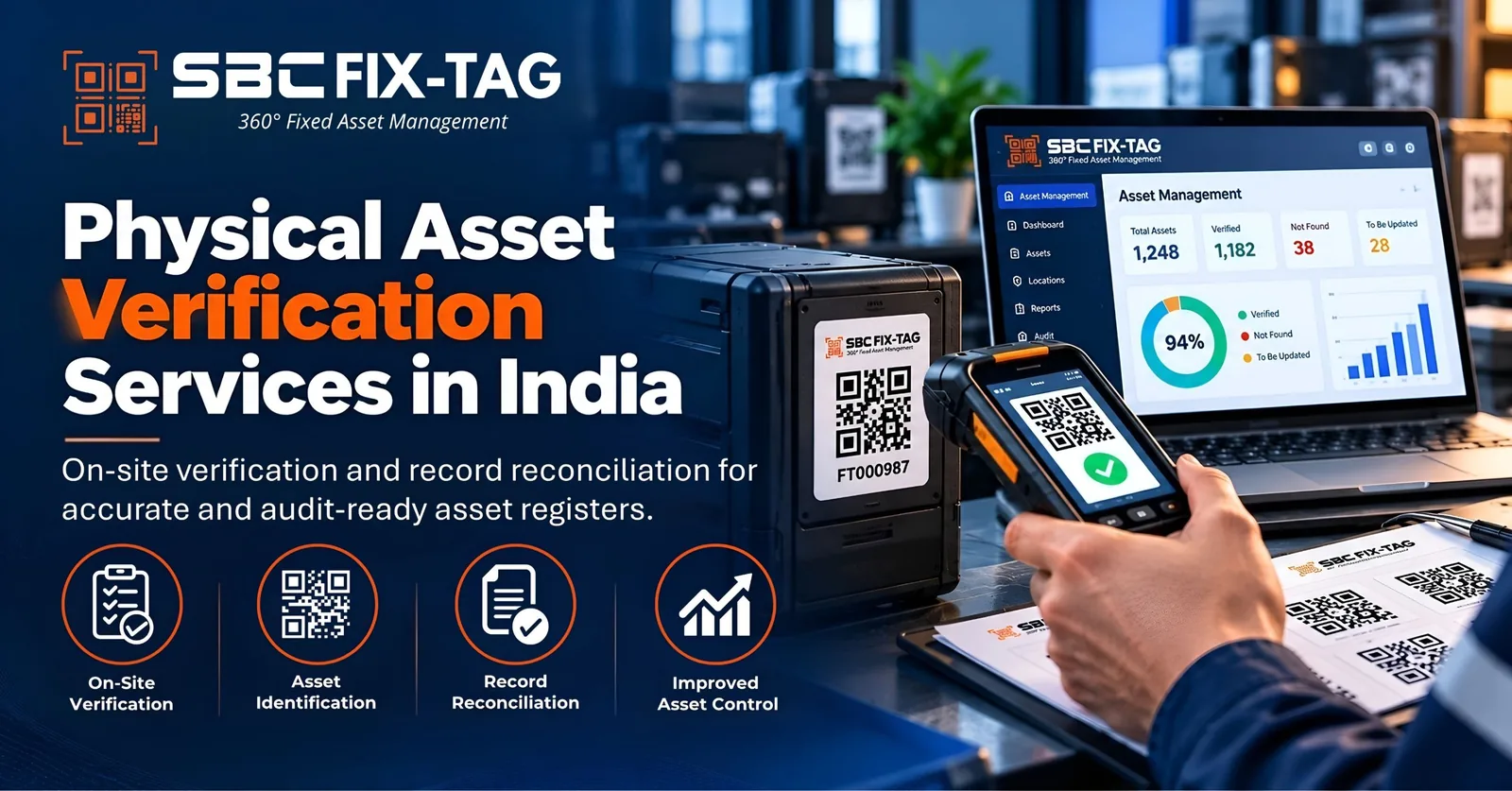
Knowing what your organisation owns is only the first step. Businesses also need to know where each asset is located, whether it is in use, and whether the details match the records maintained by finance and operations teams. Physical asset verification helps establish this connection by checking assets on-site against the organisation's fixed asset register and documenting any differences.
SBC FIX-TAG helps organisations bring structure to fixed asset physical verification, asset identification, record validation and reconciliation. By connecting physical checks with asset records, businesses can identify missing or relocated assets, locate items that are not recorded correctly, and maintain clearer supporting documentation for internal review and audit.
Whether your organisation manages office furniture, laptops, servers, plant and machinery, vehicles, medical equipment or assets across multiple branches, a consistent physical verification of fixed assets process can improve visibility and support better asset control.
SBC FIX-TAG | 360° Fixed Asset Management
Fixed asset management built for India — dual SLM + WDV, QR physical audit, GST & TDS compliance, procurement-to-disposal pipeline.
What Is Physical Asset Verification?
Physical asset verification is the process of checking the actual existence, location, identification and condition of an organisation's assets and comparing the results with its fixed asset register or other approved records. It helps confirm whether assets recorded in the books can be located and whether the information associated with them remains accurate.
A structured fixed asset verification service may include reviewing the asset register, planning site visits, identifying assets, recording verification results, investigating discrepancies and preparing a reconciliation report. The scope depends on asset categories, number of locations, available records and reporting requirements.
For large or distributed inventories, digital asset verification using QR codes, barcodes or other supported identification methods can help standardise data capture and reduce reliance on paper-based checklists.
Why Is Physical Verification of Fixed Assets Important?
Asset records can become outdated when equipment is transferred between departments, moved to another location, replaced, disposed of or acquired without timely updates to the register. Periodic physical verification of fixed assets helps businesses identify these differences before they create larger reconciliation or reporting issues.
- Confirm asset existence: Check whether assets listed in the register can be physically located.
- Validate asset location: Compare the recorded location with the location observed during verification.
- Identify unrecorded assets: Flag physical assets that may not appear in the register for further investigation.
- Find missing or untraceable assets: Record items that cannot be located during the verification exercise.
- Review asset condition: Capture condition information where included in the agreed scope.
- Improve record accuracy: Support updates to asset descriptions, identification numbers, custodians and locations.
- Strengthen audit preparation: Maintain organised verification results and discrepancy records for review.
- Support management decisions: Give finance and operations teams a clearer view of assets across sites.
A well-planned fixed asset verification process gives management a practical basis for investigating differences and improving the quality of asset records.
Our Physical Asset Verification Services
1. Fixed Asset Register Review and Data Preparation
A reliable verification exercise starts with a usable asset register. Review available records to understand asset IDs, descriptions, categories, locations, departments and other fields needed for the exercise. Gaps or inconsistent entries can be listed for clarification before fieldwork begins. This preparation helps teams plan efficiently and improves comparisons between physical findings and recorded data.
2. On-Site Physical Asset Verification
During on-site fixed asset physical verification, the team checks assets at locations included in the agreed scope, compares observed information with the register and records the result using the agreed method. Depending on scope, captured information may include asset identification, description, location, department or custodian, and condition. Items that cannot be located or do not match the register are flagged for follow-up.
3. Asset Tagging and Identification
Clear identification makes future verification easier. Asset tagging services assign or apply identifiers that connect physical items with their corresponding asset records. Depending on the asset type and project requirements, suitable methods may include QR code labels, barcodes or other agreed identification technologies. Tag material, placement and technology should suit the environment in which the asset is used.
4. Fixed Asset Register Reconciliation
After fieldwork, the observed results are compared with the fixed asset register. Fixed asset register reconciliation helps group differences into actionable categories, such as assets verified as recorded, assets not located, assets found but not listed, location mismatches, duplicate identifiers or records requiring clarification. The results help the organisation investigate causes, assign follow-up actions and update records after internal approval.
5. Missing, Unrecorded and Relocated Asset Reporting
Discrepancies should be documented clearly so responsible teams can investigate them. Physical asset verification services can identify cases requiring follow-up, including assets recorded but not located, assets found at another location, or physical items that do not appear in the supplied register. Findings do not automatically establish theft, disposal, ownership or accounting treatment; each exception should be investigated.
6. Verification Evidence and Reporting
A clear fixed asset verification report summarises the scope, locations covered, verification outcomes and exceptions requiring action. Depending on the agreed scope and technology, supporting evidence may include scan records, photographs, timestamps, location details and notes. Deliverables should be agreed before the engagement begins.
7. Multi-Location Asset Verification
Organisations with offices, factories, warehouses, campuses or branches may need a consistent method across sites. Multi-location asset verification applies common identification and reporting rules across included locations. Scheduling, access arrangements, site contacts and reporting should be confirmed during project planning.
8. Support for Periodic and Annual Verification
Repeating verification at an appropriate interval helps organisations keep records current as assets are purchased, moved, reassigned or disposed of. A recurring fixed asset audit and verification cycle can compare current findings with prior results and highlight unresolved exceptions. Frequency should reflect asset profile, movement risk, internal policies and applicable requirements.
How the Physical Asset Verification Process Works
- Step 1: Understand the ScopeConfirm the locations, asset categories, approximate asset count, register format, access requirements and expected deliverables.
- Step 2: Prepare the Asset RegisterReview available data and identify missing fields or inconsistent identifiers that may affect verification.
- Step 3: Verify Assets at the LocationCheck assets within the agreed scope, compare identifying details with the register and record the verification outcome.
- Step 4: Record and Investigate ExceptionsDocument assets not located, assets found but not listed, and mismatches in identification or location for follow-up.
- Step 5: Reconcile the FindingsCompare field results with the asset register and prepare a clear list of matched records and exceptions.
- Step 6: Share the Report and Follow-Up ItemsProvide the agreed report and supporting records so the organisation can review discrepancies, approve required changes and maintain the updated register.
Who Benefits From Physical Asset Verification Services?
Manufacturing and Industrial Companies
Verify plant and machinery, production equipment, tools, office equipment and assets distributed across factories or production units.
IT and Technology Businesses
Check laptops, desktops, servers, networking devices and other IT equipment across offices, teams and storage locations.
Hospitals and Healthcare Organisations
Maintain clearer records of medical equipment, diagnostic devices, furniture and other assets used across departments and facilities.
Educational Institutions
Verify classroom equipment, laboratory assets, computers, furniture and other items spread across buildings or campuses.
Retail, Warehousing and Distribution
Check equipment, fixtures, office assets and other recorded items across stores, warehouses and distribution locations.
Large Enterprises and Multi-Branch Organisations
Use a consistent asset verification service to consolidate findings across branches, offices, plants and business units.
Common Challenges Identified During Physical Asset Verification
- Assets not located: Items appear in the register but cannot be found at the recorded site.
- Location mismatches: Assets are found in a different building, department or branch than the register indicates.
- Unrecorded physical assets: Items are found on-site but do not match a record in the supplied register.
- Duplicate or unclear identifiers: Multiple items have similar descriptions or inconsistent asset codes.
- Damaged or unreadable tags: Asset labels cannot be read or do not clearly connect to a record.
- Incomplete asset descriptions: Records lack enough detail to identify the physical item confidently.
- Open reconciliation items: Earlier discrepancies remain unresolved in the current verification cycle.
The report should describe findings objectively and identify records needing investigation. Accounting adjustments, write-offs or register changes should follow the organisation's review and approval process.
Why Choose SBC FIX-TAG for Physical Asset Verification?
SBC FIX-TAG is organised around a structured, technology-supported approach to asset identification and verification. The process, scope and expected deliverables are set out below so organisations can determine whether the solution fits their requirements.
- Structured verification workflow: Use an agreed process for register preparation, on-site checks, discrepancy recording and reporting.
- Asset identification support: Use suitable tagging and identification methods according to the confirmed project scope.
- Digital record capture: Where supported by the configured solution, record verification information digitally rather than relying only on handwritten lists.
- Clear reconciliation outputs: Organise matched records and exceptions so responsible teams can follow up.
- Multi-site planning: Define site coverage, timelines and reporting requirements before fieldwork.
- Audit-supporting documentation: Maintain the agreed records needed for management review and audit follow-up.
Physical Asset Verification vs. Fixed Asset Register Reconciliation
| Activity |
What it involves |
Purpose |
| Physical asset verification |
Checking assets at the site and recording observed details |
Establish what can be physically located and identified |
| Fixed asset register reconciliation |
Comparing verification results with the register |
Identify matches, differences and records needing investigation |
| Asset tagging |
Applying or validating asset identifiers |
Connect physical items with their records for future checks |
| Verification reporting |
Summarising coverage, findings and exceptions |
Support management review and follow-up actions |
These activities complement one another. Physical asset verification establishes the field findings, while fixed asset register reconciliation compares those findings with the records and helps identify the action required.
Frequently Asked Questions About Physical Asset Verification
What is physical asset verification?
Physical asset verification is the process of checking an organisation's assets at their actual locations and comparing observed details with its fixed asset register. It can include confirming existence, identification, location and condition within the agreed scope.
Why is physical verification of fixed assets important?
It helps organisations identify missing, relocated, unrecorded or incorrectly described assets, improve register accuracy and prepare supporting documentation for internal review and audit.
What is included in a fixed asset verification service?
The scope may include asset register review, on-site verification, asset identification or tagging, discrepancy recording, reconciliation and a final report. Deliverables depend on the engagement agreed with the service provider.
How often should fixed assets be physically verified?
The frequency depends on the organisation's internal policy, asset type, movement risk and applicable requirements. Many organisations plan periodic or annual verification, while higher-risk or frequently moved assets may need more frequent checks.
What is fixed asset register reconciliation?
Fixed asset register reconciliation is the comparison of physical verification results with the recorded asset register to identify matched records and differences that require investigation.
Can QR codes be used for physical asset verification?
Yes. Where the system supports QR workflows, a QR code can link a physical asset to its digital record and help capture verification results more consistently.
What happens if an asset is not found during verification?
The item should be recorded as an exception and investigated by the responsible team. The reason may relate to movement, an outdated location, disposal, identification issues or another cause; it should not be assumed without evidence.
Can physical asset verification cover multiple locations?
Yes. A verification project can be planned across multiple locations if scope, site access, asset records, timelines and reporting requirements are agreed in advance.
What information should be in a physical asset verification report?
A report commonly identifies the scope and locations covered, verification outcomes, matched records, discrepancies and follow-up items. Supporting evidence may be included where collected and agreed.
How can I discuss physical asset verification with SBC FIX-TAG?
Visit SBC FIX-TAG and use the available contact or demo option. Share your approximate asset count, locations, register format and verification objectives so the team can discuss the appropriate scope.
Software and field service overview